

Translating the intense and gripping tale of MMA icon Mark Kerr into a cinematic experience demanded a strong cast, both on-screen and off. The driving force behind The Smashing Machine is a powerful collaboration that merges innovative independent filmmaking with the expertise of blockbuster production.
From the high-anxiety world of Uncut Gemscomes a new kind of thriller, one set not in the diamond district but within the octagonal ring and the volatile heart of a fighting legend. The Smashing Machine, the new A24 film from writer-director Benny Safdie, is a visceral, unflinching portrait of UFC Hall of Famer Mark Kerr, brought to life in a career-defining performance by Dwayne Johnson.
The movie immerses viewers in the tumultuous beginnings of mixed martial arts, following the journey of Kerr, hailed as “the strongest fighter the sport has ever seen,” from the pinnacle of success to a devastating low marked by painkiller dependency.
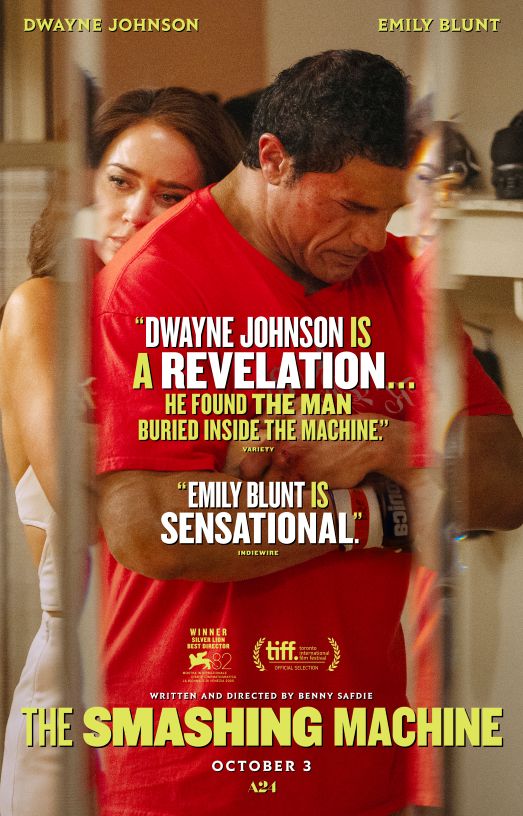
Johnson, in a transformative performance, embodies both the man and the machine at Kerr’s zenith, illustrating the fierce dominance that established his legendary status while revealing the personal struggles that nearly led to his downfall.
This narrative transcends a typical sports biopic; it unfolds as an operatic love story. At the heart of the turmoil is Kerr’s deeply committed relationship with his wife, Dawn Staples (Emily Blunt). Their fiery, combative connection ignites into verbal confrontations that Safdie captures with the same strategic intensity as the bouts in the ring, replete with psychological tactics and underhanded moves. In a brutally competitive environment, the film posits that the only true support they had was one another.
The project is a passion project years in the making for Johnson, who first saw the 2002 HBO documentary, The Smashing Machine: The Life and Times of Extreme Fighter Mark Kerr, in 2008 and was “deeply moved.” He obtained the rights through his Seven Bucks Productions, determined to tell Kerr’s story with authenticity. He found the perfect collaborator in Safdie, known for extracting raw, unseen layers from actors.
“I knew Dwayne was the only living actor who could undergo the intense physical transformation required and bring to the role an intimate, lived understanding of the public highs and private lows of life in the ring,” Safdie noted.
Benny Safdie shared in an interview
I told him, “You can go beyond the rope.” So he got into the ring a little bit. And I said to Dwayne, “we’re not cutting away here,” and he said, “Okay, so I’m going to get punched in the face.” He said this to the stunt coordinator and told the other f ighter, “You have to hit me.” The guy says, “I’m not going to do it.” Dwayne says, “You have to. The moment’s not going to work unless you hit me. And you only get one chance to do this to me,” because, as you can see when he’s looking up after the f ight, he’s gotten destroyed. He’s gotten his face hit, and he got kneed in the side, and he’s actually completely rocked.
That transformation was Herculean. Johnson worked with Oscar-winning makeup artist Kazu Hiro, enduring three to four hours of daily prosthetics and a custom hairpiece to morph into Kerr’s 2000-era physique. “Dwayne’s been doing this for a while… but he’s never done a role like this before,” said producer Hiram Garcia. The result was so startling that Emily Blunt recalls the air changing on set the first time she saw him in full character. “Everyone’s jaw dropped,” she said.

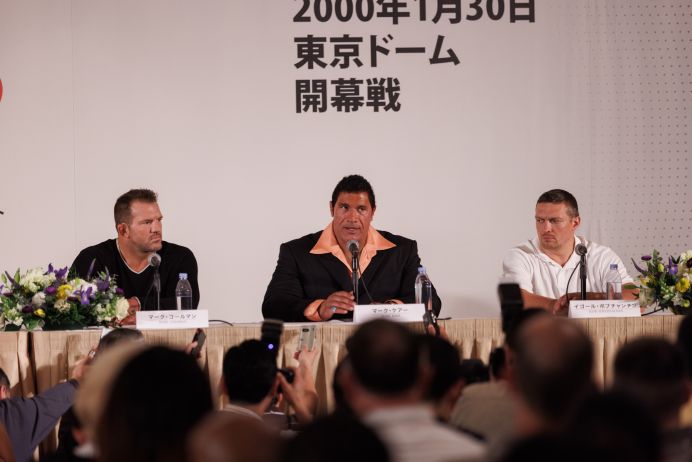
Authenticity was the guiding principle, encapsulated by the production’s mantra: “As Real As It Gets.” Safdie populated the film with real MMA legends, from Ryan Bader playing Kerr’s rival Mark Coleman to Olympic champions like Oleksandr Usyk. The fight scenes were choreographed to replicate Kerr’s actual bouts, with Johnson insisting on taking real hits for the camera. “Benny didn’t want to cut away… I knew what that meant,” Johnson said. “I felt like the MMA community would appreciate my commitment.”
This commitment extended to the domestic battleground. Production designer James Chinlund built a fully collapsible house on a soundstage to allow Safdie and cinematographer Maceo Bishop to shoot the couple’s brutal arguments from a distance, using long lenses to create a feeling of intrusive voyeurism. “You feel like an intruder,” Blunt said, “as if we shouldn’t be there.”
For Johnson, this film signifies a demanding yet refreshing new phase he has been searching for after years of starring in blockbuster action movies. It serves as a heartfelt tribute to the fighting community, to individuals grappling with addiction, and to the intricate humanity of a man whose power and celebrity risk overshadowing his true self.
As Mark Kerr himself reflected on the production, “This amazing cast of people were willing to take on this difficult topic, which was me at the time. In the process a movie was made, but we also made a family.”
The Smashing Machine is not just a story of wins and losses, but an exploration of what it means to fight for your life when your greatest adversary is yourself.
The Crew
At the helm is the multi-hyphenate Benny Safdie, the writer/director whose work on anxiety-fueled masterpieces like Uncut Gems and Good Time. He led a producing team of cinematic heavyweights: Eli Bush indie pedigree from films like Lady Bird and Uncut Gems and David Koplan.
Anchoring the project is Seven Bucks Productions, co-founded by Dwayne Johnson, Dany Garcia and Hiram Garcia, producers behind billion-dollar franchises like Jumanji and Red Notice.
The film’s immersive, documentary-like visual style is crafted by cinematographer Maceo Bishop, a Safdie collaborator and Emmy-winner for Hamilton. Production Designer James Chinlund, known for building worlds from The Batman to The Avengers, constructed the film’s aesthetic.
Costume Designer Heidi Bivens of Euphoria fame defines the period’s aesthetic, while the stunning physical transformation of Dwayne Johnson into Mark Kerr is achieved by Oscar-winning prosthetic designer Kazu Hiro (Darkest Hour, Maestro). Rounding out the team is casting director Jennifer Venditti, known for her work on Euphoria and Uncut Gems.
The man who refuses to die is back. And this time, he’s got a truck.
Road to Revenge, the eagerly awaited sequel to the cult classic SISU, out everywhere
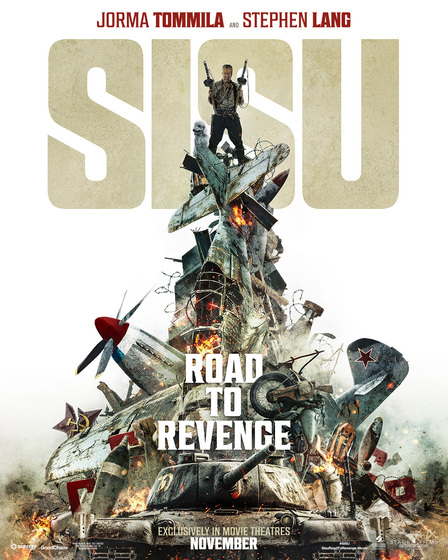
Once again directed and penned by Jalmari Helander, the film sees Jorma Tommila returning to his role as “the man who refuses to die.” This time, the solitary warrior revisits the remnants of his war-torn past — the home where his family was brutally taken from him — only to demolish it, load the debris onto a truck, and embark on a journey to reconstruct it in a safe place, honoring their memory.
However, tranquility is fleeting.
When the merciless Red Army commander who destroyed his life (played by Stephen Lang, Don’t Breathe) reemerges with revenge on his mind, a fierce, high-speed chase across the country ignites. What ensues is an unyielding, no-holds-barred battle to the death — filled with wildly creative action sequences and the gritty, grindhouse-style excitement that turned the original into a sleeper hit.
Also featuring Richard Brake, SISU: Road to Revenge guarantees non-stop action and breathtaking stunts in a cinematic experience that stretches the limits of survival and retribution.
Produced by Mike Goodridge and Petri Jokiranta, with Gregory Ouanhon and Antonio Salas as executive producers, this next installment in the SISU saga is poised to unleash pure action chaos for both longtime fans and newcomers alike.




Leave a Reply
You must be logged in to post a comment.